
SPOILER ALERT!
Recognizing The Different Kinds Of Refractive Surgery Procedures
https://ktar.com/story/874819/5-types-of-technology-for-correcting-your-vision/ -Harder Kolding
Refractive surgical treatment corrects refractive mistakes to lower or eliminate your dependency on glasses as well as get in touch with lenses. It is performed by reshaping the cornea with lasers or changing the natural lens with an artificial one.
This write-up will certainly go over the various kinds of refractive surgical procedure treatments available. This includes the current developments in laser modern technology and also various other medical methods.
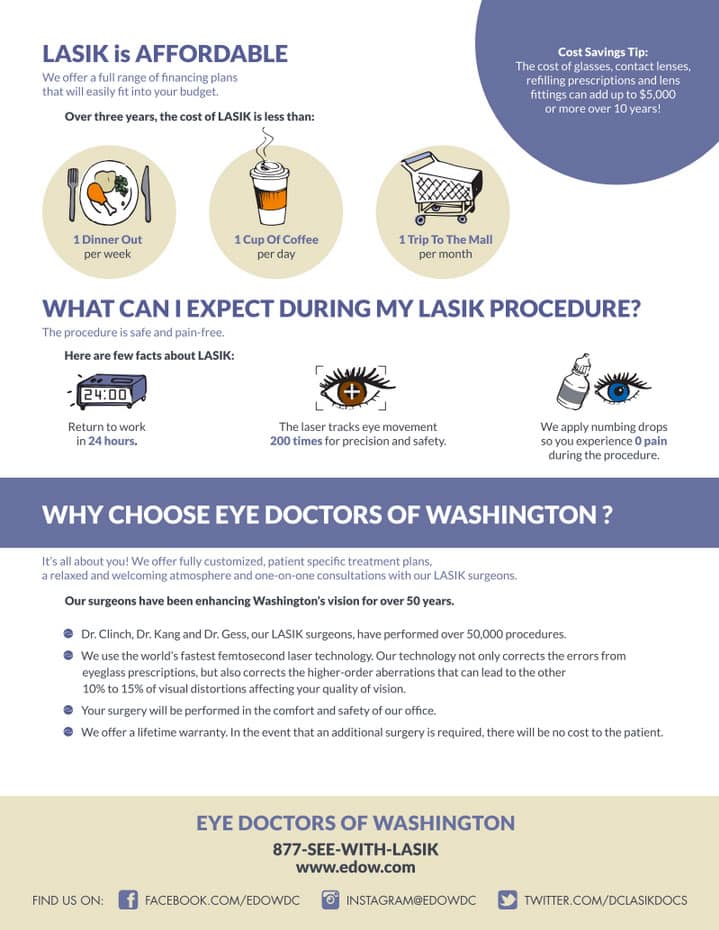
LASIK is an operation that permanently alters the shape of your eye's clear covering, the cornea. It is made use of to lower your reliance on contact lenses or glasses.
To see plainly, your eye's cornea and also lens should bend (refract) light rays to make sure that they land specifically on the retina. If your cornea or lens doesn't properly refract light, it triggers blurry vision. These issues are called refractive errors.
During LASIK, your physician applies topical anesthetic eye declines and also produces a thin hinged flap externally of your cornea. The cosmetic surgeon then makes use of a laser to improve your cornea by getting rid of precise amounts of cells. The objective is to flatten the cornea if you are myopic or make it steeper if you are farsighted. LASIK can likewise deal with astigmatism by making your cornea much more balanced and also round.
LASIK, LASEK and PRK all utilize an excimer laser to reshape the cornea (the clear layer on the front of the eye) to reduce or eliminate refractive mistake. These mistakes are brought on by light rays not bending properly when they get in the eye.
In the LASEK treatment (also referred to as laser subepithelial keratomileusis), a thin sheet of corneal cells called epithelium is gotten rid of using an alcohol solution or an ultra-thin laser. This enables the specialist to access the deeper corneal cells to permanently improve the eye for much better vision.
Unlike LASIK, LASEK does not need the creation of a flap, so it is preferable for people with thinner corneas that might be at risk of LASIK flap problems. Like LASIK, LASEK is a risk-free and reliable treatment that can assist lots of people achieve clearer, much more comfortable vision without the demand for glasses or call lenses.
Refractive lens exchange surgery gets rid of the eye's natural lens as well as changes it with a synthetic intraocular lens dental implant (IOL). RLE can be utilized to treat a large range of refractive mistakes, consisting of nearsightedness, hyperopia, presbyopia, and also astigmatism. https://www.dovepress.com/main-complications-of-photorefractive-keratectomy-and-their-management-peer-reviewed-fulltext-article-OPTH are completely without glasses after RLE, specifically when we make use of commonly made use of modern multifocal IOLs. These IOLs give great vision at near, intermediate, and also distance vision.
The sturdy synthetic lenses made use of in RLE do not age, so they can aid you avoid the demand for reviewing glasses or cataracts later in life. The treatment is done in an ambulatory clinic under topical anesthetic or, for some people and more difficult cases, neighborhood anesthetic. A lot of individuals are able to resume work and light exercises within two weeks of therapy.
A phakic IOL is an intraocular lens implant designed to treat moderate to high nearsightedness and also astigmatism. It protects lodging as well as removes the threat of corneal ectasia since the all-natural lens is not gotten rid of.
Like LASIK, phakic IOLs are extremely secure and also offer superb outcomes. One study found that 81 percent of patients attained 20/40 or far better uncorrected visual acuity.
Phakic IOLs are additionally an exceptional option for patients with a higher prescription or corneal density that is outside the series of laser refractive surgical procedure or for those that have created very early cataracts. Your medical professional can advise you on whether this is a suitable treatment for your details condition. Typically, your vision will certainly enhance within a couple of days after your phakic IOL implantation. However, it is essential to follow your physician's directions relating to hefty exercise and also preventing swimming.
ICRS is a modern-day minimally invasive medical option to slow the development of keratoconus and enhance visual acuity. These plastic semi-circular rings are dental implanted right into the corneal stroma to minimize geometric steeping by inducing an arc-shortening effect. The existing ICRS dental implant designs consist of KeraRing (Mediphacos) and also Intacs SK (Addition modern technologies).
The implantation treatment entails producing passages in the deep corneal stroma where the ring segments will be positioned. This can be done by either a mechanical or femtosecond laser assisted strategy.
After the femtosecond laser creates a 1mm channel in the cornea, the doctor painlessly inserts the ring sectors to squash the steeper parts of the cornea and make it rounder. This boosts comparison sensitivity, lowers optical aberrations and reduces astigmatism. It also allows clients with advanced keratoconus to delay the need for corneal transplant.
Refractive surgical treatment corrects refractive mistakes to lower or eliminate your dependency on glasses as well as get in touch with lenses. It is performed by reshaping the cornea with lasers or changing the natural lens with an artificial one.
This write-up will certainly go over the various kinds of refractive surgical procedure treatments available. This includes the current developments in laser modern technology and also various other medical methods.
LASIK
LASIK is an operation that permanently alters the shape of your eye's clear covering, the cornea. It is made use of to lower your reliance on contact lenses or glasses.
To see plainly, your eye's cornea and also lens should bend (refract) light rays to make sure that they land specifically on the retina. If your cornea or lens doesn't properly refract light, it triggers blurry vision. These issues are called refractive errors.
During LASIK, your physician applies topical anesthetic eye declines and also produces a thin hinged flap externally of your cornea. The cosmetic surgeon then makes use of a laser to improve your cornea by getting rid of precise amounts of cells. The objective is to flatten the cornea if you are myopic or make it steeper if you are farsighted. LASIK can likewise deal with astigmatism by making your cornea much more balanced and also round.
LASEK
LASIK, LASEK and PRK all utilize an excimer laser to reshape the cornea (the clear layer on the front of the eye) to reduce or eliminate refractive mistake. These mistakes are brought on by light rays not bending properly when they get in the eye.
In the LASEK treatment (also referred to as laser subepithelial keratomileusis), a thin sheet of corneal cells called epithelium is gotten rid of using an alcohol solution or an ultra-thin laser. This enables the specialist to access the deeper corneal cells to permanently improve the eye for much better vision.
Unlike LASIK, LASEK does not need the creation of a flap, so it is preferable for people with thinner corneas that might be at risk of LASIK flap problems. Like LASIK, LASEK is a risk-free and reliable treatment that can assist lots of people achieve clearer, much more comfortable vision without the demand for glasses or call lenses.
RLE
Refractive lens exchange surgery gets rid of the eye's natural lens as well as changes it with a synthetic intraocular lens dental implant (IOL). RLE can be utilized to treat a large range of refractive mistakes, consisting of nearsightedness, hyperopia, presbyopia, and also astigmatism. https://www.dovepress.com/main-complications-of-photorefractive-keratectomy-and-their-management-peer-reviewed-fulltext-article-OPTH are completely without glasses after RLE, specifically when we make use of commonly made use of modern multifocal IOLs. These IOLs give great vision at near, intermediate, and also distance vision.
The sturdy synthetic lenses made use of in RLE do not age, so they can aid you avoid the demand for reviewing glasses or cataracts later in life. The treatment is done in an ambulatory clinic under topical anesthetic or, for some people and more difficult cases, neighborhood anesthetic. A lot of individuals are able to resume work and light exercises within two weeks of therapy.
Phakic IOL
A phakic IOL is an intraocular lens implant designed to treat moderate to high nearsightedness and also astigmatism. It protects lodging as well as removes the threat of corneal ectasia since the all-natural lens is not gotten rid of.
Like LASIK, phakic IOLs are extremely secure and also offer superb outcomes. One study found that 81 percent of patients attained 20/40 or far better uncorrected visual acuity.
Phakic IOLs are additionally an exceptional option for patients with a higher prescription or corneal density that is outside the series of laser refractive surgical procedure or for those that have created very early cataracts. Your medical professional can advise you on whether this is a suitable treatment for your details condition. Typically, your vision will certainly enhance within a couple of days after your phakic IOL implantation. However, it is essential to follow your physician's directions relating to hefty exercise and also preventing swimming.
Intracorneal Rings
ICRS is a modern-day minimally invasive medical option to slow the development of keratoconus and enhance visual acuity. These plastic semi-circular rings are dental implanted right into the corneal stroma to minimize geometric steeping by inducing an arc-shortening effect. The existing ICRS dental implant designs consist of KeraRing (Mediphacos) and also Intacs SK (Addition modern technologies).
The implantation treatment entails producing passages in the deep corneal stroma where the ring segments will be positioned. This can be done by either a mechanical or femtosecond laser assisted strategy.
After the femtosecond laser creates a 1mm channel in the cornea, the doctor painlessly inserts the ring sectors to squash the steeper parts of the cornea and make it rounder. This boosts comparison sensitivity, lowers optical aberrations and reduces astigmatism. It also allows clients with advanced keratoconus to delay the need for corneal transplant.
